
Achieving national press coverage for Ooidonk Art Festival

Ooidonk Art Festival, credits Tijs Vervecken
Ooidonk Art Festival is a contemporary art festival located in the Leie region of Belgium. Hosted in the historic landscape surrounding Ooidonk Castle, the festival brings together Belgian and international artists and creates an exhibition experience that takes place every summer until the end of August, where contemporary art is experienced outside the traditional museum context.
The Challenge
For cultural events, visibility depends on more than announcing an exhibition programme. Art festivals compete for attention within a crowded cultural calendar and need to communicate their relevance to both specialised audiences and broader public audiences.
For Ooidonk Art Festival, the challenge was to translate an immersive, site-specific exhibition into stories that could be understood and valued by the media. The communication needed to highlight not only which artists participated, but also why the festival mattered within Belgium’s cultural landscape.
Objectives
The campaign aimed to:
Increase national awareness of Ooidonk Art Festival among art, design, lifestyle and cultural audiences;
Position the festival as an important contemporary art event in Belgium;
Generate sustained media attention before and during the exhibition period;
Create editorial opportunities that communicated the artistic vision behind the festival;
Strengthen relationships between journalists, artists and the organisation.
Strategy
The communication strategy was built around one central principle: cultural events gain stronger media attention when they are presented through a clear editorial perspective rather than simple event promotion.
COVERED developed a press strategy that translated the exhibition into relevant stories for different audiences. The focus was not only on highlighting the artworks, but on explaining the relationship between the artists, the historic location and the evolving landscape around them.
Creating multiple editorial moments
The campaign was structured around several communication phases rather than a single press launch. Different press releases introduced new perspectives on the festival, allowing media coverage to develop throughout the exhibition period.
This approach reflects how editorial calendars work: journalists are more likely to engage with new information and fresh angles than repeated announcements.
Prioritising strong visual communication
Photography plays a crucial role in determining whether a story can be published. The campaign therefore treated photography as an essential communication asset.
Images by photographer Tijs Vervecken captured the relationship between artworks, gardens and changing light conditions, giving editors ready-to-use material for print and digital publications.
Building direct relationships with journalists
Alongside broad press distribution, COVERED focused on targeted outreach to relevant journalists. Each pitch was adapted to the publication’s audience and editorial interests.
This ensured that the festival reached media outlets with a genuine interest in contemporary art, design and cultural experiences.
COVERED developed and implemented a national PR campaign including:
Communication strategy development;
Creation of press releases with different editorial angles;
Press list development across art, culture, design and lifestyle media;
Personalised media pitching;
Organisation of an invitation-only press preview;
Coordination of a guided festival visit for journalists;
Photography briefing and coordination with photographer Tijs Vervecken;
Media follow-up throughout the exhibition period.
Results
The campaign generated significant national media attention for Ooidonk Art Festival, with over 50 national features, including television and radio coverage.
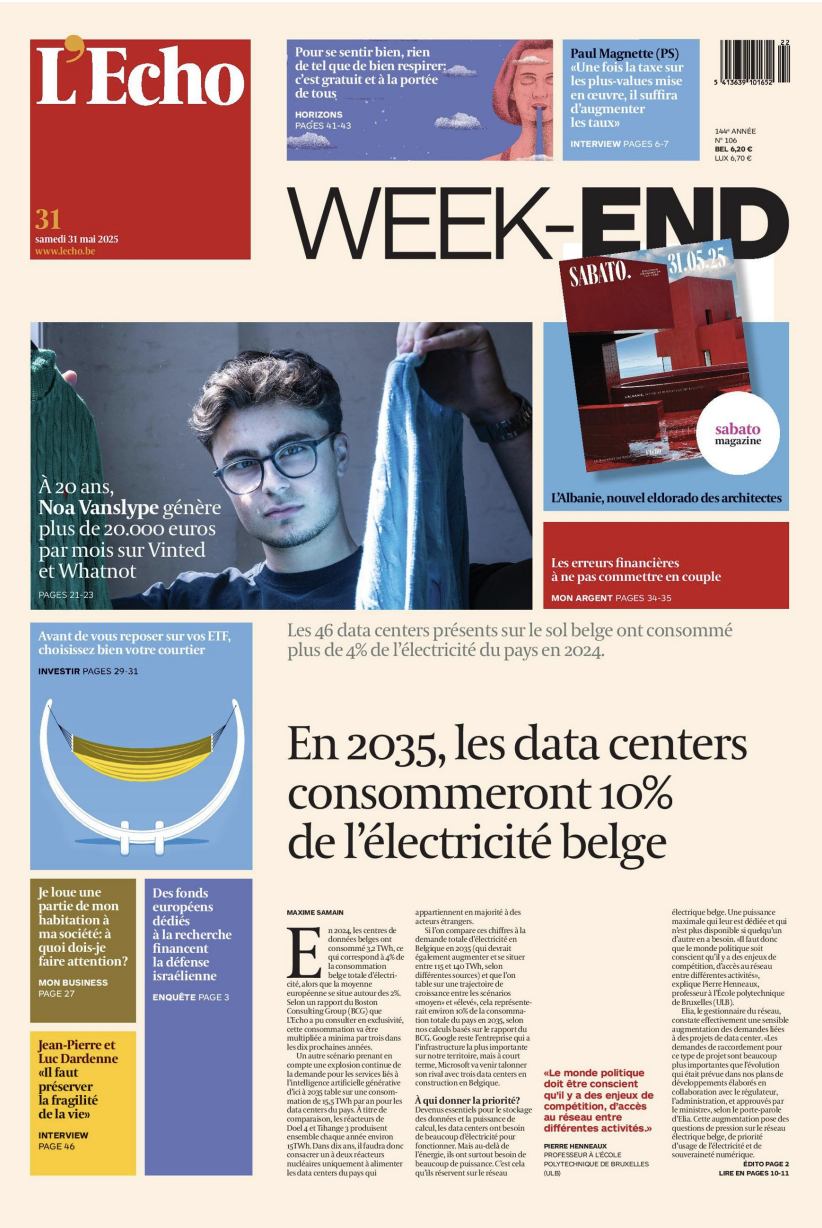
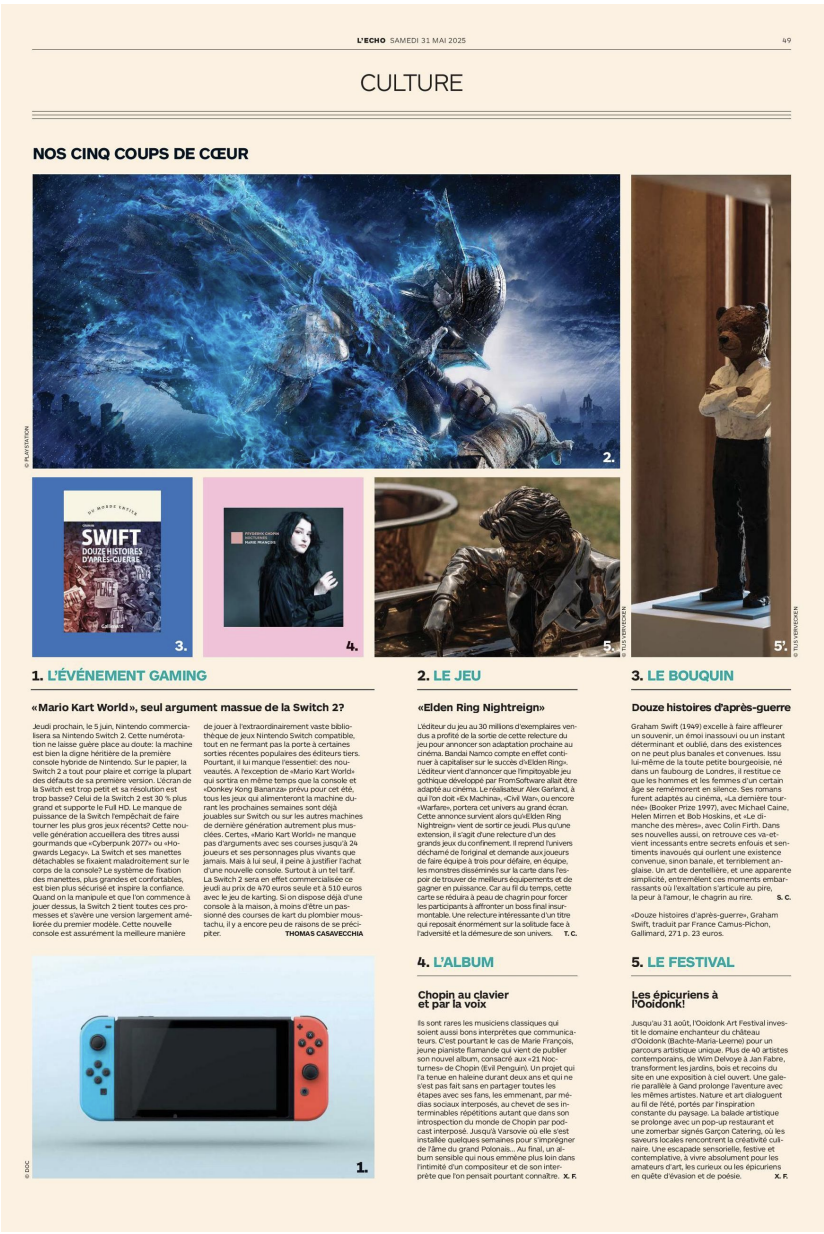
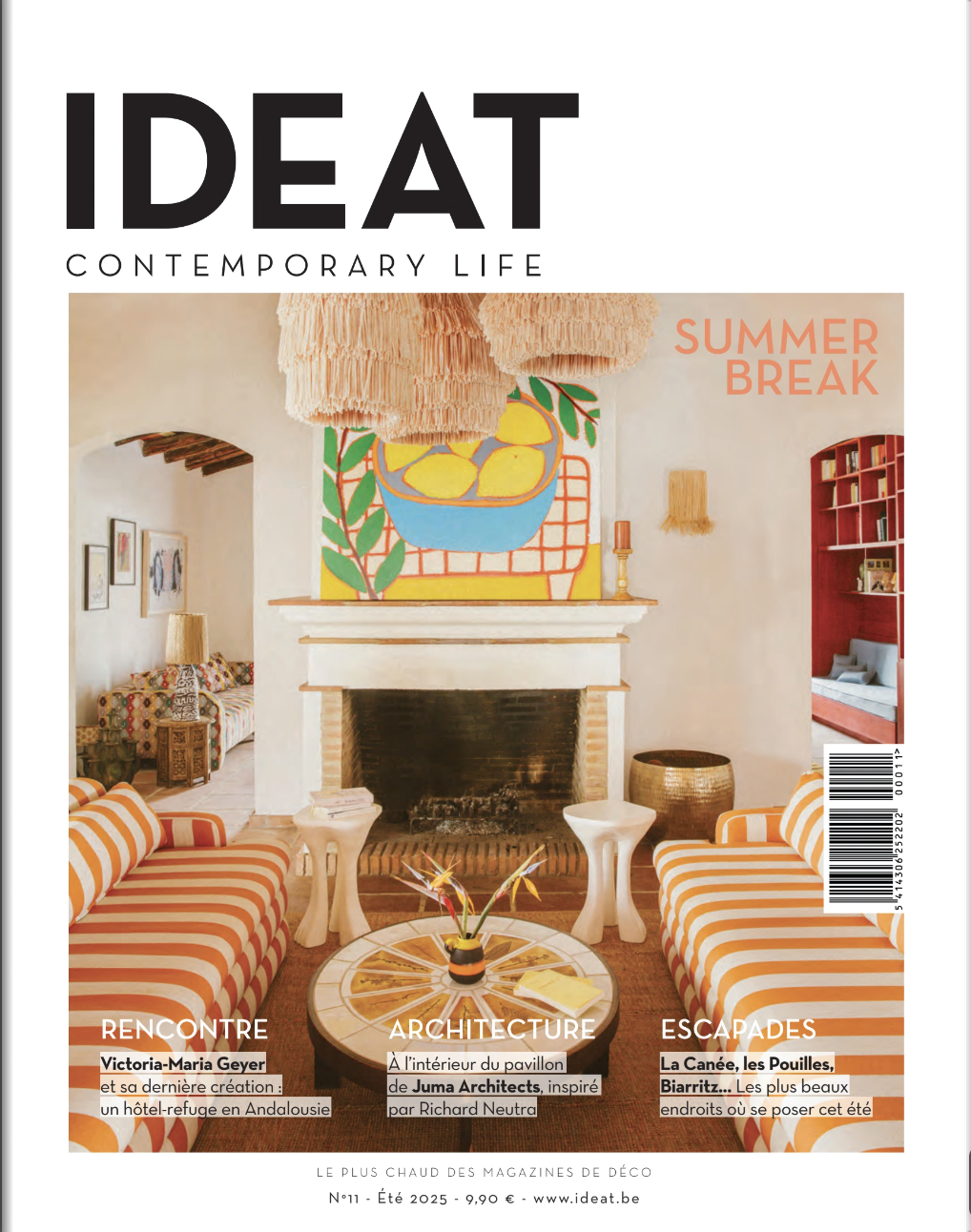
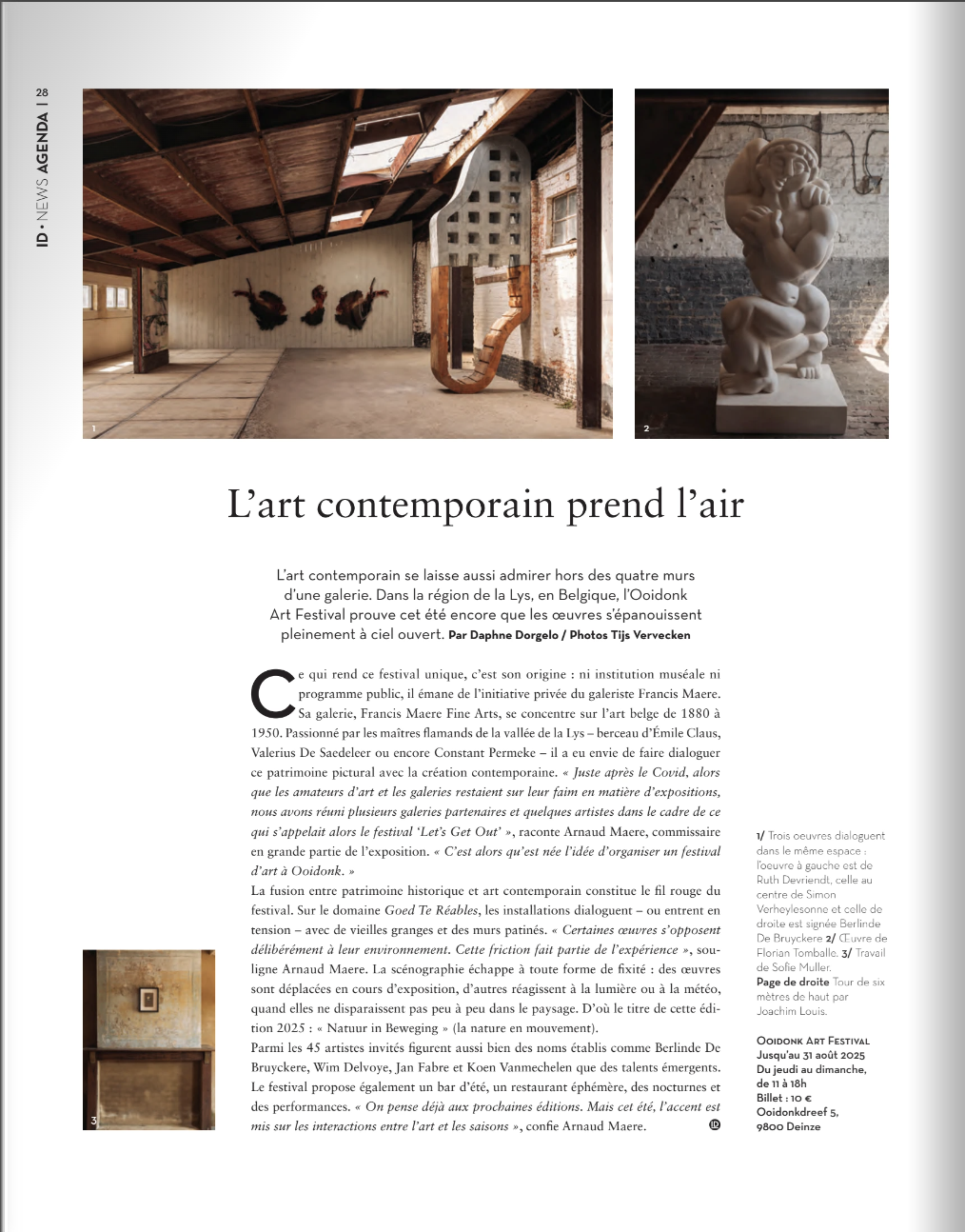
The coverage helped establish Ooidonk Art Festival as a recognised cultural event within Belgium’s summer programme. By combining editorial storytelling, strong imagery and targeted media relations, the campaign generated visibility across different media formats and audiences.
What Art Institutions Can Learn From This Project
A strong narrative increases media relevance
Cultural projects become easier to cover when communication explains the ideas behind the work, not only the practical details of the event.Visual communication influences editorial success
High-quality photography helps journalists understand and communicate the experience of an exhibition.Press relations require more than information sharing
Creating opportunities for journalists to meet artists and experience a project firsthand often leads to more in-depth coverage.Long-term visibility requires multiple communication moments
A phased PR approach helps maintain attention throughout an exhibition period.Media outreach should be selective and relevant
Targeted pitching creates stronger results than sending the same message to every publication.
This case demonstrates how a focused PR strategy can help contemporary art organisations build recognition, generate meaningful media coverage and communicate the value of cultural projects to wider audiences.